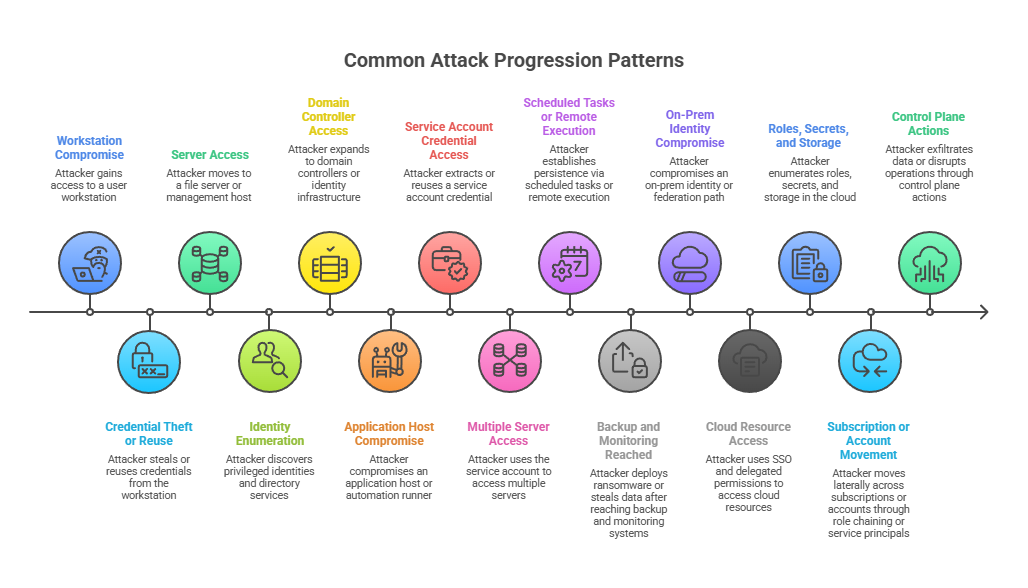
攻撃者が最初の足場を築いてしまうと、主なリスクは最初に侵害されたホストだけにとどまりません。真の被害は、攻撃者がシステムからシステムへと移動し、通常の管理業務に紛れ込み、重要な資産に到達するまで静かにアクセス権を拡大していく際に発生します。
この「横方向の移動」こそが、その拡大の要因です。現代の侵入攻撃が、ランサムウェア、データ窃取、さらにはドメイン全体の侵害へと発展する仕組みは、まさにこれにあります。これを阻止するには、単一のエンドポイントが不審かどうかだけでなく、ネットワーク全体におけるIDやホストの挙動を可視化する必要があります。
このガイドでは、横方向の移動(ラテラルムーブメント)の仕組みと、セキュリティチームが実環境においてこれを検知する方法について解説します。SOCアナリスト、脅威ハンター、およびセキュリティ責任者は、攻撃者がシステム間をどのように移動するか、どのようなプロトコルやツールを悪用するか、そして重大な被害が発生する前に横方向の移動を明らかにする振る舞い 学ぶことができます。
ラテラルムーブメントとは? 「ラテラルムーブメント」とは、攻撃者が初期アクセスを獲得した後、侵害されたシステムからネットワーク内の他のシステムへと移動するプロセスを指します。攻撃者は、正当な認証情報、信頼されたプロトコル、または管理ツールを利用してアクセス権限を拡大し、価値のある資産を特定した上で、権限昇格、データ窃取、ランサムウェアの展開などの行動に備えます。権限を強化する「権限昇格」とは異なり、ラテラルムーブメントは環境全体にわたるアクセス権限の拡大に焦点を当てています。
横の動きは、従来のセキュリティ・ツールのレーダーの下をくぐり抜けることが多いため、この区別は重要である。攻撃者は正当な認証情報とネイティブ・システム・ツールを活用し、その活動を通常のネットワーク・トラフィックに見せかける。2025年のIllumioのレポートでは 、組織の90%近くが過去1年間に何らかの形で横の動きを経験しており、その結果、1インシデントあたり平均7時間以上のダウンタイムが発生していることが明らかになっています。
ビジネスへの影響は技術的な指標にとどまりません。検知されないラテラルムーブメントが1分ごとに、攻撃の潜在的影響範囲は拡大します。1台のワークステーションの侵害から始まったものが、ドメイン全体の侵害、データの流出、あるいは企業全体にわたるランサムウェアによる完全な暗号化へと急速にエスカレートする可能性があります。こうした状況の進展こそが、効果的なゼロトラスト・アーキテクチャ とプロアクティブな脅威ハンティング 機能の実装が、現代のセキュリティプログラムにおいて不可欠となっている理由を説明しています。
攻撃者が横方向の移動を利用する理由 攻撃者が横方向に移動するのは、検出される確率を下げつつ、攻撃が命中する確率を高めることができるためである。
一般的な目標には、次のようなものがあります:
ディレクトリサービス、ファイルサーバー、ハイパーバイザー、クラウド制御プレーンなど、より高付加価値なシステムへのアクセスを拡大します。 広範なアクセスを可能にする特権ユーザーおよびサービスアカウントにアクセスします。 ランサムウェアによる被害を 最小限に抑えるために、データストアとバックアップシステムを特定する。複数の足場を築いて冗長性を確保し、封じ込めを困難にする。 ネイティブツール、リモート管理プロトコル、および既存の信頼関係を活用し、通常の運用にシームレスに統合します。 ラテラルムーブと権限の昇格 「ラテラルムーブメント」とは、システム間を水平方向に拡大していくことを指します。「権限の昇格」 とは、権限を 垂直方向に引き上げることを指します。攻撃者はしばしばこの2つを組み合わせています。つまり、権限の 昇格を可能にするシステムやIDを見つけるためにラテラルムーブメントを行い、その後、昇格したアクセス権を利用して、より広範囲にラテラルムーブメントを行うのです。
調査中にそれらを区別する実用的な方法:
ある同一のアカウントが予想以上に多くのシステムに アクセスしている場合は、ラテラルムーブメントの疑いがある。 あるアカウントが突然、新たな権限を取得したり、以前はできなかった操作を行ったりした場合は、権限昇格の疑いがある。 両方が短い時間内に発生した場合は、進行中の攻撃とみなす。 なぜ横方向の移動が企業のセキュリティにとって極めて重要なのか 横方向の移動により、侵害された単一のアカウントやデバイスが、企業全体にわたるセキュリティリスクへと発展します。攻撃者は、ID、エンドポイント、サーバー、クラウド環境を横断して移動することで、機密データにアクセスしたり、特権アカウントを侵害したり、重要な業務を妨害したりすることが可能です。侵害による影響を最小限に抑え、被害の拡大を防ぐためには、横方向の移動を早期に検知し、阻止することが不可欠です。
ラテラルムーブメントの仕組み 横方向の移動の多くは、攻撃者がサイバーキルチェーンの初期段階(偵察や認証情報の取得など)を完了した後に発生します。攻撃者は、最初に足場を築いた後、システムを特定し、認証情報を入手し、正規の管理プロトコルを利用して他のホストにアクセスすることで、環境内を移動していきます。
第1段階:調査と発見 攻撃者はまず、ネットワークのマッピングを行い 、どのようなシステムが存在し、それらがどのように接続されているかを把握します。そして、Active Directory オブジェクトの列挙、開放ポートのスキャンを行い、ドメイン コントローラー、ファイル サーバー、管理用ホストなどの重要なシステムを特定します。
一般的な検出方法には、次のようなコマンドやツールが含まれます:
ネットビューヌルテストPowerShell の AD 列挙コマンドレット ポートスキャンとサービス検出 これらのツールは管理者によって一般的に使用されているため、この段階ではセキュリティアラートがほとんど発生しないか、まったく発生しないことがよくあります。
第2段階:認証情報へのアクセスおよび認証資料 攻撃者は環境を把握すると、システム間を移動できる追加の認証情報を取得することに 注力する。
一般的な認証情報の取得方法には、次のようなものがあります:
メモリからパスワードハッシュを抽出する(LSASSのダンプ) Kerberosチケットの取得 認証情報の保存メカニズムの悪用 キャッシュされた認証情報を取得する 攻撃者は、Mimikatz のようなツールを使用したり、次のような組み込みユーティリティを利用したりする可能性があります。 procdump.exe で 「現地調達型(LOTL)」攻撃 .
有効な認証情報や認証トークンを使用すれば、攻撃者はログイン失敗のアラートを発生させることなく、他のシステムにアクセスすることができます。
第3段階:アクセスと動作の実行 正当な認証情報を手に入れた攻撃者は、システム間を横方向に移動し始める。
これには通常、次のようなリモート管理プロトコル が含まれます:
リモートデスクトッププロトコル(RDP) SMB管理共有 Windows Management Instrumentation (WMI) PowerShell リモート処理 (WinRM) 攻撃者は、新しいシステム上でコマンドを実行するために、リモートプロセス、スケジュールされたタスク、またはサービスを作成します。ピボットが成功するたびに、攻撃者の足場が拡大し、機密性の高いシステムや特権的なIDに到達する可能性が高まります。
悪用される一般的なプロトコル 攻撃者は、横方向の移動のために、いくつかの組み込みのリモート管理プロトコルを常習的に悪用しています。これらのプロトコルは、正当な企業管理を支援するために存在するため、悪意のある活動を通常の管理業務と見分けることが 困難になります。
最も頻繁に悪用されるプロトコルには、SMB、リモートデスクトッププロトコル(RDP) 、Windows Management Instrumentation(WMI)、およびPowerShell Remoting(WinRM)が含まれます。
SMB / Windows 管理用共有 (T1021.002) SMBは 、Windows環境において依然として 最も一般的な横方向の移動手段の一つです 。ADMIN$ 、C$ 、IPC$ などの管理用共有は、システム間のリモートファイルアクセスやコマンド実行を可能にします。
攻撃者はSMBを利用して、以下のことを行います:
リモートシステムにペイロードを展開する PsExec などのツールを使用してコマンドを実行する ツールやスクリプトをホスト間で転送する リモート実行のために管理共有にアクセスする SMBは企業環境で広く利用されているため、悪意のある活動が正当なシステム管理トラフィックに紛れ込む可能性があります。
リモートデスクトッププロトコル (T1021.001) リモートデスクトッププロトコル (RDP )は 、リモートシステムへの対話型アクセスを提供するため、攻撃者は正当な管理者であるかのようにシステムを操作することが可能になります。
攻撃者は、RDPを次のような目的で頻繁に利用します:
侵害されたホストへの常時リモートアクセスを維持する システムやネットワークをインタラクティブに探索する コマンドやツールを手動で実行する 長時間継続するセッションを通じて指揮統制を確立する 攻撃者が正当な認証情報を使用して認証を行う場合、RDPのアクティビティは検知されないままになる可能性があります。
Windows Management Instrumentation (T1047) Windows Management Instrumentation(WMI)は、管理者がネットワーク経由で コマンドを実行したり、システム情報を照会したりできるリモート管理機能を提供します。
攻撃者はWMIを悪用して、以下のことを行います:
リモートコマンドを実行する リモートシステム上でプロセスを起動する システム構成またはレジストリキーを変更する 永続化メカニズムを確立する WMIは正規の管理インターフェースであるため、多くのセキュリティツールはこの通信を通常の管理トラフィックとして扱います。
PowerShell リモート処理と WinRM (T1021.006) PowerShell Remoting は Windows リモート管理 (WinRM) を利用して、管理者が複数のシステムで同時にスクリプトを実行できるようにします。
攻撃者は通常、この機能を利用して以下のことを行います:
リモートPowerShellコマンドを実行する 複数のホストでスクリプトを実行する 情報収集と認証情報の収集を行う ファイルをディスクに書き込まずにペイロードを展開する 攻撃者は、PowerShellコマンドをエンコードしたり、メモリ上で実行したりすることが多く、そのため検知が著しく困難になる。
プロトコルの検出とテレメトリ 以下の表は、横方向の移動中にこれらのプロトコルが一般的にどのように現れるか、またどのシグナルが不審な活動の 特定に役立つかを示しています。
プロトコル
一般的な手法
検知方法
イベントID
SMB
PsExecの展開
名前付きパイプの作成
5145, 5140
右派系
直接認証
ログオンタイプ10
4624, 4778
ダブルエムアイ
リモートプロセス作成
WMIアクティビティ
5857, 5860
ウィンアールエム
PowerShellの実行
WSManコネクション
91, 168
一般的な横移動攻撃テクニック 横方向の移動手法は、特定のパターンとして理解するのが最も適切です。MITRE ATT&CK TA0008) に対応していますが、防御担当者は、その前提条件、実行経路、および発生する兆候を把握しておくことで、最大の効果を得ることができます。
以下の表は、一般的な横方向の移動に関するプロトコルと、攻撃者の手法および検知シグナルとの対応関係を示しています。
テクニック
どのようなことが可能になるか
一般的な前提条件
一次信号
ハッシュの転送
平文のパスワードを使用せずに認証する
NTLMハッシュへのアクセス
明示的な認証情報の使用、異常な横方向のログオン、Kerberosが想定される場面でのNTLMの使用
「パス・ザ・チケット」とチケットの再生
盗んだKerberosチケットを使用してユーザーになりすます
チケットの盗難または偽造チケット
通常とは異なるサービスチケットのリクエスト、標準的ではないチケットの有効期間、通常とは異なるホストからの特権サービスへのアクセス
リモートサービスの悪用(RDP、SMB、SSH)
新しいホストへの対話型またはサービスベースのアクセス
有効な認証情報とネットワークへの接続性
新しい管理パス、営業時間外のリモートセッション、セグメント間のイースト・ウエスト・トラフィックの急増
WMI、WinRM、およびリモート実行
リモートホストでコマンドを実行する
管理者権限または委任された管理権限
システムを管理していないエンドポイントからのリモートプロセス作成、およびWMI/WinRMによるアクティビティ
スケジュールされたタスクとサービスの作成
リモートホスト上で永続化し、実行する
タスクまたはサービスを作成する権限
新しいスケジュールされたタスク、新しいサービス、リモート管理共有からのサービス作成
サービスアカウントおよび委任アクセス権の悪用
人間以外のアイデンティティを利用して移動する
権限が過剰に付与されたアカウントまたはキー
新しいサービスアカウントの使用、多数のホストへのアクセス、異常なAPI呼び出しやディレクトリの読み取り
攻撃者が「リビング・オフ・ザ・ランド」の手法を活用する方法 「Living Off the Land LOTL)」攻撃は、ラテラルムーブメントの進化形であり、カスタム マルウェア を必要とせず、環境内に既に存在する正当なシステムツールを悪用します。このアプローチにより、検知率が劇的に低下すると同時に、攻撃の進行速度が加速します。
外部のものを導入するよりも マルウェア、攻撃者は、セキュリティチームが日常的に使用している組み込みの管理ツールや信頼されたプロトコルに依存しています。
LOTLによく見られる挙動には、次のようなものがあります:
PowerShell を使用した情報収集、認証情報の取得、およびリモートコマンドの実行Windows Management Instrumentation (WMI) を使用したリモートプロセスの実行SMB管理用共有 またはPsExecなどのツールを使用した横方向の移動リモートシステム上でコマンドを実行するためのスケジュールされたタスクまたはサービスの 作成 WinRMまたはPowerShellリモート機能 を活用したスクリプトによるマルチホスト実行これらのツールは正当な管理業務で広く使用されているため、LOTLの活動は通常の業務と見分けがつかないことがよくあります。
典型的な攻撃の流れとしては、偵察にPowerShell、リモート実行にWMI、そして持続化にスケジュールされたタスクが用いられることがあり、これらはすべて従来の マルウェアを展開することなく行われる。
攻撃経路の例 実際の侵入行為は様々ですが、その動きのパターンは繰り返されます。これらの例は、アナリストが攻撃の進行状況を把握するのに役立つよう作成されています。
例 1:ワークステーションからディレクトリサービスへ ユーザーのワークステーションへの初期の足掛かり。 認証情報の不正アクセスまたはトークンの再利用。 ファイルサーバーまたは管理ホストへの横移動。 特権IDおよびディレクトリサービスの発見。 ドメイン コントローラーやIDインフラストラクチャ への拡張。 例 2:サービスアカウントの展開 攻撃者がアプリケーションホストまたは自動化ランナーを侵害する。 サービスアカウントの認証情報を取得または再利用します。 そのIDを使用して、サービスアカウントが信頼されている複数のサーバーにアクセスします。 スケジュールされたタスクまたはリモート実行を通じて永続性を確保します。 バックアップシステムや監視システムに到達すると、ランサムウェアを展開するか、データを盗み出す。 例 3:ハイブリッド・ピボットからクラウド制御プレーンへの移行 攻撃者がオンプレミスのIDまたはフェデレーションパスを侵害する。 SSO(シングルサインオン)と委任された権限を使用して、クラウドリソースにアクセスします。 ロール、シークレット、およびストレージを一覧表示します。 ロールチェーンまたはサービスプリンシパルを通じて、サブスクリプションやアカウント間で横方向に移動します。 コントロールプレーンへの操作を通じて、データを外部へ流出させたり、運用を妨害したりする。
横方向の動きを示す兆候 横方向の移動は、単一の明白な事象として現れることはめったにありません。むしろ、攻撃者はホスト間を移動する際に、認証システム、エンドポイント、ネットワークトラフィック全体にわたり、微細な振る舞い を残していきます。
セキュリティチームは、以下の兆候の組み合わせを監視することで、横方向の移動の可能性を特定することができます:
アイデンティティ活動
複数のシステムにまたがる異常な認証パターン 新しいホストに対して認証を行うサービスアカウント 予期しない場所やデバイスからのログイン 異常なKerberos チケット要求、または予期しないNTLM認証 エンドポイントの動作
WMIまたはPowerShellを使用したリモートプロセス実行 リモートホストでのスケジュールされたタスクまたはサービスの作成 LSASSのメモリまたは認証情報ストアへのアクセス 通常のワークフローの外で実行される管理ツール ネットワークの活動状況
内部ホスト間の新しいSMB接続 予期しないRDPセッション システム間の東西方向のトラフィックが増加 WinRM または PowerShell リモート接続 これらのシグナルを、ユーザー、ホスト、ネットワーク活動間で相互に関連付けて分析すると、重大な被害が発生する前に、攻撃者が環境内を移動していることが明らかになることがよくあります。
横方向の動きによく見られる兆候 セキュリティチームは、以下の状況を確認した際、横方向の移動の可能性について調査を行うべきです:
複数のシステムにまたがる異常な認証アクティビティ PowerShell、WMI、PsExec などの管理ツールの予期せぬ使用 新規または異常なリモートデスクトッププロトコル(RDP)またはSMB接続 通常はやり取りを行わないシステムにアクセスするサービスアカウント ログイン成功後の権限昇格 内部システム間の東西方向のネットワークトラフィックの増加 複数のホスト上でプロセスやスケジュールされたタスクをリモートで実行する これらの活動は、それぞれ単独では正当なものである可能性がありますが、複数の兆候が同時に見られる場合は、攻撃者が乗っ取られた認証情報を使用して環境内を移動していることを示唆していることがよくあります。
横移動の検出と防止 ラテラルムーブメントに対する効果的な防御には、事前の予防、リアルタイムの検知、迅速なインシデント対応 能力を組み合わせた多層的なアプローチが必要です。包括的な戦略を導入している組織では、従来の境界線に焦点を当てたセキュリティに依存している組織よりも、ラテラルムーブメントを73%速く検出できたと報告しています。
重要なのは、妥協を想定すること、つまり攻撃者が最初のアクセスを獲得することを受け入れ、攻撃者の拡散能力を制限する防御を構築することにある。この哲学は、ワークロード間にきめ細かなセキュリティ境界を設けることで攻撃の伝播を劇的に制限するマイクロセグメンテーションのような最新のアプローチを推進します。ネットワーク検知とレスポンス 機能、および適切なイベント相関と組み合わせることで、組織は重大な被害が発生する前に、ラテラルムーブメントを検知 封じ込めることができます。
WindowsイベントID検出パターン Windows セキュリティ・イベントは、ラテラルムーブメントを検知するための豊富な遠隔測定を提供しますが、ほとんどの組織では適切な相関ルールが実装されていません。ラテラルムーブメントを検知するために重要な4つのイベントIDは、一緒に分析すると攻撃者の振る舞いを明らかにするパターンを作成します。
イベント ID 4624(ログオンの成功 )は、ユーザがシステムに認証されたことを示す。ログオン・タイプ 3(ネットワーク・ログオン)とタイプ 10(リモート対話型)は、特に横の動きの検知に関連します。特にサービス・アカウントから、または通常とは異なる時間帯に、短い時間枠の中で複数のシステムにわたって連続したタイプ 3 ログオンのパターンを探します。
イベント ID 4625(失敗したログオン )は、偵察とパスワード・スプレーの試みを明らかにする。複数の 4625 イベントが発生し、その後に 4624 が成功すると、多くの場合、クレデンシャルの推測を示す。単一のソースからの複数のシステムにわたる失敗パターンには特に注意してください。
イベント ID 4648(明示的な資格情報の使用) は、プロセスがログイン中のユーザーとは異なる明示的な資格情報を使用した場合に発生します。このイベントは、「パス・ザ・ハッシュ」攻撃や「オーバーパス・ザ・ハッシュ」攻撃を検知する上で極めて重要です。プロセス作成イベント(4688)と相関分析を行うことで、正当なツールが資格情報の窃取に 悪用されている状況を特定できます。
イベントID 4769(Kerberos Service Ticket Request)は 、Pass the Ticket攻撃とゴールデン・チケットの使用を特定するのに役立ちます。異常なサービス・チケット・リクエスト、特にハイ・プリビレッジ・サービスや通常リクエストしないシステムからのチケット・リクエストは調査が必要です。
以下の相関パターンは、横方向への移動の可能性を示している:
パターン
イベントシーケンス
タイム・ウィンドウ
リスクレベル
偵察
マルチ 4625 → シングル 4624
5分
ミディアム
ハッシュを渡す
4648+4624(タイプ3)
1分
高い
サービス・アカウントの不正使用
4624 (タイプ3) サービス勘定より
どんなものでも
高い
Kerberos攻撃
珍しい4769パターン
10分
クリティカル
ネットワーク・セグメンテーション戦略 ネットワーク・セグメンテーションは、従来のVLAN分離をはるかに超えて進化し、ラテラルムーブメントを防止するための基礎となっています。最新のマイクロセグメンテーション・アプローチは、個々のワークロードの周囲にきめ細かなセキュリティ境界を作り出し、最初の侵害後でも攻撃の伝播を劇的に制限します。
ゼロトラスト・ネットワーク・アクセス(ZTNA)の原則は、ネットワークセグメント間の暗黙的な信頼を排除します。送信元ネットワークや以前の認証に関係なく、すべての接続において明示的な検証が求められます。このアプローチにより、攻撃者が侵害した認証情報を利用して無制限に横方向の移動を行うことを阻止し、各境界で認証を強制します。
ソフトウェア定義境界(SDP)は、許可されたユーザーと特定のリソースとの間に、動的で暗号化されたマイクロトンネルを作成します。広範なネットワークアクセスを提供する従来のVPNアプローチとは異なり、SDPはビジネス機能に必要なものだけに接続を制限します。このきめ細かさにより、たとえ有効な認証情報があっても、攻撃者がネットワークを探索することを防ぎます。
効果的なセグメンテーションのための実装ベストプラクティスには、重要資産の特定とその周囲への保護ゾーンの構築、セグメント間の厳格な東西方向トラフィックフィルタリングの実施、ユーザー・デバイス・アプリケーションのコンテキストを考慮したアイデンティティ認識型制御の導入が含まれる。組織はまた、セグメント間トラフィックの異常を監視し、ペネトレーションテスト を通じてセグメンテーションの有効性を定期的に検証すべきである。
マイクロセグメンテーションのビジネスケースは説得力があり、企業は侵害コストの削減と運用の効率化を通じて大きなROIを報告している。ラテラルムーブメントを制限し、攻撃の爆発半径を縮小することで、マイクロセグメンテーションへの投資は、測定可能なセキュリティとビジネス価値をもたらします。
検出ツールと技術 最新の検知には、エンドポイント、ネットワーク、アイデンティティに特化したテクノロジーを組み合わせて連携させる必要がある。単一のツールで横の動きを完全に可視化することはできませんが、複数のドメインのシグナルを相関させる統合プラットフォームが最も高い検出率を達成します。
Endpoint Detection and Response (EDR) ソリューションは、個々のシステム上のプロセス実行、ファイルアクセス、レジストリ変更に対する深い可視性を提供します。高度な EDR プラットフォームは振る舞い 分析を 使用して、PowerShell の異常な使用、プロセスインジェクション、またはクレデンシャルダンプの試行などの疑わしいパターンを識別します。脅威インテリジェンスとの統合により、既知の横移動ツールやテクニックを検出することができます。
ネットワーク検出・対応(NDR)技術は、ネットワークトラフィックを 分析して、横方向の移動を示す兆候を検知します。機械学習モデルは、正常な通信パターンの基準値を学習し、異常なSMBトラフィック、予期しないRDP接続、不審なサービスアカウントの動作などの異常を検知してアラートを発します。NDRは 、エンドポイントの制御をすり抜ける可能性のあるLOTL攻撃の検知に特に優れています 。
XDR(Extended Detection and Response) プラットフォームは、エンドポイント、ネットワーク、クラウド環境全体の信号を相関させ、複雑な横移動パターンを特定します。複数のソースからのテレメトリを組み合わせることで、XDR は、個別のツールでは見逃してしまうような多段階の攻撃を検知することができます。また、プラットフォームのアプローチは、関連するイベントを統合インシデントに相関させることで、アラートの疲労を軽減します。
Identity Threat Detection and Response (ITDR) は、特に ID ベースの攻撃に特化した最新のカテゴリである。これらのソリューションは、認証フローを監視し、クレデンシャルの不正使用を検知 し、横の動きを可能にする特権昇格の試みを特定します。侵害の80%が漏洩した認証情報であることを考えると、ITDRは検出スタックの重要なギャップを埋めるものです。
クラウドネイティブの横移動 クラウド環境は、従来のセキュリティ対策では対応できなかった独自の横移動ベクトルをもたらします。責任共有モデル、動的なインフラ、API駆動型のアーキテクチャは、オンプレミス環境では不可能な方法で攻撃者が横方向に移動する機会を生み出します。コンテナベースの横移動攻撃は著しく増加しており、クラウドに特化した防御の緊急性が浮き彫りになっています。
クラウドプラットフォームの抽象化レイヤーは、インフラからプラットフォーム、ソフトウェアサービスに至るまで、それぞれに明確な横移動リスクが存在する。攻撃者は設定ミスを悪用し、サービスアカウントを悪用し、クラウドを強力にしている自動化そのものを活用する。このようなクラウドネイティブのテクニックを理解することは、最新のクラウドセキュリティアーキテクチャを 保護するために不可欠です。
コンテナとKubernetesの横移動 コンテナのエスケープは 、コンテナ化された環境における最も直接的な横移動の形態です。攻撃者はコンテナランタイム、カーネルサブシステム、またはオーケストレーションプラットフォームの脆弱性を悪用し、コンテナの隔離から抜け出す。MITRE ATT&CK テクニック T1611 には、特権コンテナの悪用からマウントされたホスト・ファイルシステムの悪用まで、さまざまなエスケープ手法が記載されています。
Kubernetesクラスターは、サービスアカウントトークンの悪用による追加リスクに直面しています。すべてのポッドはデフォルトでサービスアカウントトークンを受け取り、攻撃者が偵察や ラテラルムーブに悪用できるAPIアクセス権を提供します。過剰な権限を持つ単一のポッドを侵害するだけで、Kubernetes APIを介したクラスター全体のアクセスが可能になります。
最近のサイドカー・コンテナ攻撃の増加は、進化するテクニックを示している。攻撃者はポッド内の1つのコンテナを侵害し、ボリュームやネットワーク・ネームスペースなどの共有リソースを使用して近隣のコンテナにアクセスします。この横移動は同じポッド内で発生し、多くの場合、ネットワークベースの検出を回避します。
侵害されたコンテナイメージを介したサプライチェーン攻撃は、事前配置された横方向移動機能を可能にします。バックドアや暗号通貨マイナーを含む悪意のあるイメージは、組織がインフラ全体に展開する際に自動的に拡散します。2024年12月のDocker Hubインシデントでは、数千のイメージに隠された マルウェアが検出された事例が、このリスクを如実に示している。
クラウドサービスの悪用パターン クラウドサービスのアカウントと管理されたアイデンティティは 、侵害された場合に強力な横移動のベクトルとなります。AWSでは、攻撃者はIAMロールの仮定を悪用してアカウントとサービス間をホップします。ロールがアタッチされた侵害されたEC2インスタンスは、ロールが許可するあらゆるリソースにアクセスでき、複雑な組織の複数のAWSアカウントにまたがる可能性がある。
Azure のサービスプリンシパルも同様の悪用に直面しています。サービスプリンシパルを持つアプリケーションを侵害した攻撃者は、そのパーミッションを使用してAzureリソースにアクセスし、ディレクトリを列挙し、他のサブスクリプションに移動する可能性があります。サービスプリンシパル認証のプログラム的な性質は、この活動が正当な自動化と同じように見えるため、検知を困難にします。
サーバーレス関数の連鎖は、巧妙な横移動経路を生み出す。攻撃者は1つのLambda関数またはAzure Functionを侵害し、その実行コンテキストを使用して他の関数を呼び出したり、データベースにアクセスしたり、ストレージサービスとやり取りしたりする。サーバーレス実行のエフェメラルな性質は、フォレンジックと検知を複雑にします。
ハイブリッド・クラウド環境におけるTheWizards APTグループのIPv6 SLAAC攻撃は、プロトコルレベルの脆弱性がいかに横展開を可能にするかを示している。オンプレミスとクラウドのインフラを接続するデュアルスタックネットワークのIPv6自動設定を悪用することで、彼らはIPv4トラフィックに焦点を当てたセキュリティ制御を回避しました。この手法は、クラウド接続がいかに予期せぬラテラルムーブベクトルを生み出すかを浮き彫りにしています。
横移動ディフェンスへの現代的アプローチ ラテラルムーブメント攻撃の進化は、同様に進化した防御を必要としています。ゼロトラスト・アーキテクチャなどの最新のアプローチを導入している組織は、攻撃成功率が67%減少したと報告しており、侵入を前提とし、暗黙の信頼を排除することの有効性を実証しています。これらの戦略は、初期の侵害を防ぐことではなく、その影響を封じ込めることに重点を置いています。
マイクロセグメンテーション、AI主導 検知、アイデンティティ中心のセキュリティなど、複数の防御技術の融合により、攻撃者の目的を挫く深層防御が実現します。PCI DSS v4.0では ネットワーク・セグメンテーションの検証が明示的に義務付けられ、NIS2指令では横の動きに対する回復力が強調されている。
ラテラルムーブメント防御への投資は、目に見える成果をもたらします。包括的なゼロトラスト戦略を導入している組織は、攻撃成功率の低減に加え、侵害コストの大幅な削減を実現しています。IBMの2021年の調査では、成熟したゼロトラストを導入している組織は、ゼロトラストを導入していない組織と比較して、176万ドルのコスト削減を実現しました。インシデント発生頻度の低減と侵害発生時の影響の最小化は、最新の防御アプローチへの投資を正当化するものです。
ゼロトラスト・アーキテクチャは、信頼できる内部ネットワークという概念を排除し、接続元を問わずすべての接続に対して継続的な検証を義務付けます。このアプローチは、攻撃者が悪用する暗黙の信頼を排除することで、ラテラルムーブメントに直接対抗します。ゼロトラストを実装した組織は、セキュリティ体制の劇的な改善を報告しており、ラテラルムーブメントのインシデントを90%削減した組織もあります。
NIST SP 800-207 フレームワークは、ゼロトラスト実装のための包括的なガイダンスを提供します。主要な原則には、すべてのトランザクションの明示的な検証、最小権限アクセスの適用、そしてすべてのセキュリティ決定における侵害の想定が含まれます。これらの原則は、ラテラルムーブメントを可能にする条件に直接対処しています。
AI主導の検知能力は著しく成熟しており、機械学習モデルは現在、横の動きを示す微妙な振る舞い 異常を特定することができる。これらのシステムは、通常のユーザーやエンティティの行動をベースラインとし、侵害を示す可能性のある逸脱を検知 します。シグネチャベースの検知とは異なり、AIアプローチは新しい攻撃手法やLiving Off the Land 手口を特定することができます。
マイクロセグメンテーション市場は2030年までに520億8,000万ドルに成長すると予測されているが、これはラテラルムーブメントを防止する効果を反映したものである。最新のマイクロセグメンテーション・プラットフォームは、ID、ワークロード属性、アプリケーションの依存関係を利用して、動的なセキュリティ・ポリシーを作成する。このアプローチは、静的なネットワーク境界を越えて、リスクとコンテキストに基づいて調整する適応型防御を実現します。
Vectra AIはラテラルムーブメントをどのように捉えているか Vectra AIは、シグネチャや既知のパターンではなく、攻撃者の振る舞いに焦点を当てた方法論であるAttack Signal Intelligence™を通じて 、ラテラルムーブ検知にアプローチします。このアプローチは、ツールや技術が進化する一方で、横の動きに必要な基本的な行動は一貫していることを認識しています。
このプラットフォームは、ネットワーク、エンドポイント、ID間の弱いシグナルを相関させ、個々のアラートが見逃す可能性のあるラテラルムーブメントのパターンを特定します。エンティティ間の関係や通常の通信パターンを分析することで、Attack Signal Intelligence 、攻撃者が正規のツールやプロトコルを使用している場合でも、ラテラルムーブメントを示す異常な動作を特定します。
この振る舞いアプローチは、従来の検知を回避するLiving Off the Land 攻撃に対して特に効果的です。このプラットフォームは、特定のツールやコマンドを探すのではなく、ラテラルムーブメントの結果 (異常なアカウントの使用、非定型のシステム・アクセス・パターン、異常なデータ・フロー) を特定します。この手法により、既知と未知の両方のラテラルムーブメントテクニックを検知することが可能になり、進化する攻撃手法に対する耐性を提供します。
動画: 行動検知が、正当な管理ツールやプロトコルに紛れ込んだ攻撃者の活動を含め、IDやシステム間の不審な動きをどのように 明らかにできるかをご覧ください。
VIDEO
今後の動向と新たな考察 今後12~24か月で、攻撃側と防御側の双方が新興技術を活用するにつれ、横方向移動の動向は大きな変革を遂げる。人工知能は攻撃能力と防御能力の両方に革命をもたらしており 、機械学習を活用した攻撃ツールは横方向移動の機会を自動的に特定・悪用する一方、防御用AIは振る舞い においてますます高度化している。
IoTやエッジ・コンピューティング・デバイスの急増により、攻撃対象は飛躍的に拡大しています。接続された各デバイスは、特にIT/OTの融合が進む製造業やヘルスケア環境において、ラテラルムーブメントの潜在的な支点となります。ガートナーは、2024年の15%から2026年までに60%の組織がIoTデバイスを介したラテラルムーブメントを経験すると予測しています。組織は、このような非従来型のエンドポイントを包含するように、ラテラルムーブメントに対する防御を拡張する必要がある。
耐量子暗号は、認証とラテラルムーブを驚くべき方法で再構築する。組織が新しい暗号標準を導入して量子コンピューティングの脅威に備える一方で、移行期間には脆弱性が生じます。攻撃者はすでに将来の復号化のために暗号化された認証情報を採取しており、移行期間中に混在する暗号環境は、プロトコルのダウングレード攻撃を通じて新たなラテラルムーブメントベクトルを導入することになる。
EUのNIS2指令や、今後予定されている米国連邦政府の要件では、ラテラルムーブ防止を明確に取り上げており、規制の圧力は高まり続けている。ネットワーク・セグメンテーションとラテラルムーブメント対策が不十分であった場合、企業は全世界の売上高の最大 2%に相当する制裁金を科される可能性がある。規制の焦点は、基本的なコンプライアンスから、巧妙なラテラルムーブメント攻撃に対する回復力の実証へと移っている。
サプライチェーンセキュリティ は、特にソフトウェア依存関係やサードパーティとの連携を通じて、重要なラテラルムーブメントの要因として浮上しています。2025年の予測では、侵害の40%がサプライチェーン接続を介したラテラルムーブメントに関係するとされています。組織は、ゼロトラスト原則をベンダーアクセスにも拡張し、サードパーティ接続とコアインフラストラクチャの間に厳格なセグメンテーションを実施する必要があります。
今後 24 ヶ月間の投資の優先順位は、ID を中心としたセキュリティ対策に重点を置くべきである。組織は、パスワードレス認証、継続的な本人確認、特権アクセス管理を優先すべきである。さらに、攻撃のスピードが加速し続け、横の動きを封じ込めるには人間の対応時間ではもはや十分でないため、自動化された対応機能が不可欠となる。
結論 ラテラル・ムーブメントは、技術的な好奇心から、現代のサイバーセキュリティの決定的な課題へと発展している。組織の90%近くがこの脅威に直面しており、攻撃は1時間以内に広がる可能性があり、平均的な侵害のコストは全世界で444万ドルとなっている。しかし、これらの数字は物語の一部を語っているに過ぎない。真のインパクトは、横の動きが意味する根本的な転換にある。つまり、侵害を防ぐことから、侵害を想定し、被害を抑えることへと転換することである。
技術やツールは進化し続けますが、効果的な防御の原則は変わりません。組織は、暗黙の信頼を排除するゼロトラスト・アーキテクチャを採用し、攻撃の拡散を抑制するマイクロセグメンテーションを実装し、使用されるツールに関わらず攻撃を特定する行動検知を導入する必要があります。攻撃成功率の減少と侵害コストの大幅な削減が実証されていることから、これらの投資が目に見える成果をもたらすことが分かります。
セキュリティリーダーは明確な選択を迫られています。ますます巧妙化する攻撃者に追いつくか、ラテラルムーブメントが単に可能というだけでなく、確実に発生する世界に備えてセキュリティアーキテクチャを根本的に見直すかです。この現実を受け入れ、壊滅的な被害が発生する前にラテラルムーブメントを阻止・検知する、回復力の高い防御を構築する組織こそが、成功を収めるでしょう。
ラテラルムーブメント検知へのアプローチを変革する準備はできていますか?Vectra AIのAttack Signal Intelligence、攻撃者が使用する手法に関係なく、お客様の環境におけるラテラルムーブメントを特定し、阻止する方法をご覧ください。
出典および方法論 本ガイドで言及されている知見は、実際の攻撃行動や検知手法を分析した、一般に公開されている脅威インテリジェンスの調査結果および防御ガイドラインに基づいています。
これらの情報源は、企業環境全体で実施されたインシデント調査、セキュリティテレメトリの分析、および防御上のベストプラクティスを統合したものです。