すべてのセキュリティオペレーションセンター(SOC)は、同じジレンマに直面しています。組織を保護するために設計されたツールが、アナリストをノイズの洪水に溺れさせているのです。現在、組織は1日平均2,992件のセキュリティアラートを受信していますが、そのうち63%は未対応のままとなっています (Vectra AI )。フラグが立てられた事象と実際に調査される事象との間のこのギャップこそが、セキュリティ侵害の始まりなのです。 「2025年SANS検知・対応調査 」によると、セキュリティチームの73%が、検知における最大の課題として誤検知を挙げています。一方、組織の76%は、アラート疲労をSOCの主要な懸念事項として挙げています (Cybersecurity Insiders 2025)。本ガイドでは、アラート疲労とは何か、その測定方法、コンプライアンスとの関連性、そして解決に向けた段階的なロードマップについて解説します。
アラート疲労とは何ですか? アラート疲労とは、 SOC運用 アナリストが、圧倒的で持続的なセキュリティアラートの量に直面した際に経験する感覚の鈍化であり、その結果、真の脅威を見逃したり、対応が遅れたり、無視したりすることにつながります。これにより、 脅威検知の の質を低下させ、組織のリスクを高めます。
この概念は医療分野に端を発する。医療現場では、医療機器のアラーム音が絶え間なく鳴り響くことに臨床スタッフが感覚を麻痺させてしまう――この現象は「アラーム疲労」として知られている。2010年代から2020年代にかけて、SIEMの 導入や検知ツールの乱立が加速するにつれ、サイバーセキュリティ分野でもこの用語が採用されるようになった。両分野における心理的メカニズムは全く同じである。つまり、通知の量が人間の処理能力を超えると、人はすべての通知――重要なものも含めて――に反応しなくなってしまうのだ。
この問題の深刻さは、すでに多くの報告で明らかになっています。組織が1日に受け取るセキュリティアラートの平均数は2,992件 (Vectra AI )であり、2025年の3,832件、2023年の4,484件から減少しています。しかし、件数の減少だけでは問題は解決していません。 これらのアラートの63%は依然として未対応のままであり、76%の組織がアラート疲労をSOC(セキュリティオペレーションセンター)の最大の課題として挙げています (Cybersecurity Insiders 2025)。単にアラートの数を減らすだけでは解決策にはなりません。重要なのはシグナルの質です。
アラート疲労とアラーム疲労 アラート疲労は、臨床現場、すなわち患者モニターからの絶え間ないビープ音によって看護スタッフが重大な警告に鈍感になってしまった病院で生まれた現象です。アラート疲労とは、この現象をサイバーセキュリティの文脈に適用したもので、SOC環境におけるセキュリティ監視アラートに当てはまります。両者には共通の根本的なメカニズムがあります。それは、通知量が過剰になることで鈍感化が生じ、重大なシグナルを見逃してしまうという点です。本ページでは、サイバーセキュリティの文脈に限定して解説します。
警戒疲労の一般的な兆候 アラート疲労は、一夜にして生じることはめったにありません。アナリストが長期間にわたり、大量かつ反復的で価値の低いアラートにさらされることで、徐々に進行していきます。組織は、運用指標とアナリストの行動の両方を監視することで、この問題を特定できる場合が多くあります。
警戒疲労の一般的な兆候には、次のようなものがあります。
調査されていないセキュリティアラートの未処理件数が増加している。 トリアージまでの平均時間(MTTT)および対応までの平均時間(MTTR)の増加。 アナリストが、調査を行うことなく、低・中程度の深刻度のアラートを却下したり無視したりしている。 偽陰性率の上昇。これにより、真の脅威がインシデント発生後に初めて発見されることになる。 アナリストのバーンアウトや離職率の増加、および仕事への満足度の低下。 アラートの重複や相関性の低さによって引き起こされる、繰り返しの調査。 複数のセキュリティツールやコンソールにわたって、手動による優先順位付けへの依存度が高まっている。 こうした傾向が今後も続くのであれば、組織は、セキュリティ上の成果に影響が出る前にノイズを低減 するため、検知ルールの品質、アラートの優先順位付け、およびシグナルの相関分析を見直すべきである。
アラート疲労の原因は何ですか? アラート疲労は、誤検知、ツールの乱立、手動による優先順位付け、アラート量の増加、そして断片化したSOC環境全体で重なり合う人員不足に起因しています。ACM Computing Surveysの 調査では、その原因を4つの構造的カテゴリーに分類していますが、IBMの分類法ではこれを6つに拡張しています。以下は、最新のデータに基づいた統合的な見解です。
誤検知と精度の低いアラート。 セキュリティチームの73%が、検知における最大の課題として誤検知を挙げています (SANS 2025)。Microsoft/Omdiaの「State of the SOC 2026 」レポートによると、全アラートの46%が誤検知であることが判明しており、アナリストの業務負荷のほぼ半分が、セキュリティ上の価値を生み出していないことになります。ツールの乱立とコンソールの分散。 企業は平均で10.9個のセキュリティコンソールを管理している(Microsoft/Omdia 2026)。69%の企業が10個以上の検知ツールを導入しており、39%は20個以上を使用している (Vectra AI )。各ツールは、独自のコンソール、深刻度スケール、フォーマットを備えた独自のアラートストリームを生成する。検知ルールの品質が低い。 環境の変化に適応できない旧式の侵入検知・防止システムに 由来する、不適切な閾値設定、冗長なルール、および静的なシグネチャは、元からノイズを発生させる原因となる。定期的な調整を行わないと、検知ルールの精度は時間の経過とともに低下していく。手動によるトリアージプロセス。 アラートの調査には平均70分か かり、誰かが対応を開始するまでに56分が経過している (Cybersecurity Insiders 2025)。複数のコンソール間での手動による相関分析が、この遅延をさらに悪化させている。アラート件数の増加。 77%の組織でアラート件数が増加しており、46%は過去1年間で25%以上の急増を経験した(Cybersecurity Insiders 2025)。人材不足。 世界のサイバーセキュリティ分野における人材不足は480万人に達しており、チームの59%が「深刻」または「重大」なスキル不足を報告している (ISC2 2025)。少数のアナリストがより多くのアラートを処理することになり、疲労が蓄積している。SIEMとEDRが問題にどのように関与しているか SIEMプラットフォームは、数百もの情報源からのアラートを集約しますが、多くの場合、適切な相関分析や重複排除が行われていません。エンドポイント検知・対応( EDR)ツールはエンドポイントレベルのアラートを生成しますが、その数は管理対象の端末数に比例して増加します。ツールのうち、データをSIEMに自動的に送信しているのは約59%に過ぎず(Microsoft/Omdia 2026)、残りのデータについてはアナリストが手動で相関分析を行う必要があります。その結果、単一のインシデントがプラットフォーム間で数十件もの個別のアラートを発生させ、それぞれについて個別に調査を行う必要が生じます。
アラート疲労が現実社会に与える影響 アラート疲労は、セキュリティ侵害の見逃し、数十億ドル規模の優先順位付けコスト、アナリストの燃え尽き症候群を引き起こし、内部脅威の検知 において悪用され得る脆弱性を生み出しています。
表:財務面、業務面、人的側面におけるアラート疲労の定量的な影響。
事例研究:ターゲット社への不正アクセス事件(2013年)。 FireEyeの検知システムは、 マルウェアを特定したが、アナリストは毎日数千件に及ぶ通知の中に埋もれたこのアラートを見逃してしまった。その結果、4,000万件の決済カード情報が流出する事態となった。これは、アラート疲労がいかにして直接的に情報漏洩の被害規模に直結するかを示す典型的な事例である。
事例:エクイファックス情報漏洩事件(2017年)。 CVE-2017-5638に関するパッチ通知が優先順位付けの処理待ちリストに埋もれてしまい、最終的に1億4700万件の記録が流出する事態となった。この失敗は検知段階ではなく、インシデント対応段階 に起因するものであり、重要なアラートが日常的な運用ノイズに埋もれてしまったことが原因であった。
アラート疲労と内部脅威の検知 内部脅威は、特有の課題をもたらします。内部リスクの主要な兆候である「振る舞い 」に関するアラートは 、正当なユーザーの行動が初期段階の内部犯行とよく似ているため、本質的にノイズが多いものです。アナリストが疲労感からこれらのアラートの優先順位を下げると、内部脅威はより長期間にわたり検知されないままになります。 内部リスクによる年間平均コストは1,740万ドル(Ponemon 2025)に上るため、振る舞い 検知するアラートを無視することのリスクは極めて大きい。
敵の戦術としてのアラートストーム 高度な攻撃者は、SOCアナリストを圧倒し、実際の侵入活動を隠蔽するために、意図的に大量のアラートを発生させます。この戦術は、 MITRE ATT&CK 防御回避(0005) — 具体的には「防御能力の低下」(T1562Intezerの2026年の調査 調査によると、深刻度の低いアラートによって実際の脅威の約1%を見逃している企業は、年間で約50件の真の脅威を見逃していることが判明した。この隙を、攻撃者は積極的に悪用している。
アラート疲労がSOCのパフォーマンスに与える影響 アラート疲労は、アナリストのウェルビーイングに影響を与えるだけでなく、セキュリティ運用の有効性を直接低下させます。アナリストが誤検知や重複したアラートの調査に多くの時間を費やすほど、真の脅威の特定、優先順位付け、封じ込めに要する時間が長くなります。これにより、インシデント対応 が遅れ、運用コストが増加し、攻撃者が検知されずに潜伏し続ける機会が生まれてしまいます。
一般的な運用上の影響としては、次のようなものがあります。
平均検知時間(MTTD)の長期化: アナリストが優先度の低いアラートを大量に処理しなければならないため、重大な脅威が見過ごされてしまう。平均対応時間(MTTR)の長期化: セキュリティチームが、確認済みのインシデントへの対応よりもノイズの選別により多くの時間を費やすため、調査と是正措置が遅れている。検知精度の低下: アラートの数が多すぎると、アナリストが正当な脅威を見過ごしたり、無視したりする可能性が高まる。アナリストの生産性の低下: 反復的な手作業による調査により、脅威ハンティング 、検知技術の構築、および予防的なセキュリティ対策の改善に充てられる時間が減少します。運用コストの増加: 価値の低いアラートの確認にアナリストの作業時間が割かれる一方、セキュリティツールが分散しているために、調査作業の重複が生じている。MTTD、MTTR、誤検知率、アラートからインシデントへの転換率、未調査のアラートといったKPIを監視することで、セキュリティ責任者はアラート疲労が運用に与える影響を定量的に把握し、経時的な改善状況を測定することができます。
アラート疲労を測定する方法 アラート疲労を測定するには、誤検知率、調査されなかったアラートの割合、平均トリアージ時間、およびアナリストの離職率を、業界のベンチマークと比較して追跡する必要があります。定量化可能なサイバーセキュリティ指標が なければ、組織はアラート疲労を特定・追跡・報告することができず、予算やツールの変更を正当化することができません。
最も効果的なアプローチは、変更を加える前に現状を把握することから始まります。フォーティネットのSOC指標ガイドで 推奨されているように、組織は改善策を実施する前に、少なくとも1回の完全な運用サイクルにわたって現状の指標を収集すべきです。
表:SOC運用におけるアラート疲労の深刻度を測定・追跡するための診断スコアカード。
KPI
式/定義
ターゲット
業界の基準
偽陽性率
誤検知アラート数 / アラート総数 × 100
<30% overall
平均46%(Microsoft/Omdia 2026年)
アナリスト1人あたりの1日あたりのアラート数
1日あたりのアラート総数 / アクティブなアナリスト数
組織固有;前四半期比で減少
1日平均2,992台(Vectra AI )
未調査のアラート率
未調査のアラート数 / アラート総数 × 100
<20%
42%(Microsoft/Omdia 2026年予測)から63%(Vectra AI )
平均トリアージ時間
トリアージの合計時間/トリアージされたアラートの数
<15 min
平均56~70分(Cybersecurity Insiders 2025)
アナリストの離職率
退社したアナリスト数 / アナリスト総数 × 100(年間)
<15% annual
ジュニアアナリストの70%が3年以内に退職している(SANS 2025)
アラートからインシデントへの転換率
確認された事象数 / アラート総数 × 100
組織固有のベースライン
低レートはノイズが多すぎることを示している
SOCにおけるアラート疲労の兆候としては、調査されていないアラートの割合の増加、平均トリアージ時間の延長、アラートからインシデントへの転換率の低下、およびアナリストの離職率の上昇などが挙げられます。これらの指標を毎月追跡し、社内の基準値および上記の業界ベンチマークと比較してください。
アラート疲労を軽減する方法 アラート疲労を軽減するには、ルールの調整や情報の充実から、AIを活用した優先順位付けや振る舞い に至るまで、段階的なアプローチが必要です。
以下の30日・60日・90日のロードマップは、体系的な導入プロセスを示しています。まずはノイズの発生源を解消し、次にデータ強化と相関分析を構築し、最後に戦略的な自動化を導入します。
図: アラート疲労を軽減するための段階的な 導入スケジュールフェーズ1 — 早期成果(最初の30日間) 冗長または価値の低い検知ルールを監査し、無効化する 環境の基準値に基づいてアラートの閾値を調整する 重複するツール間で重複するアラートを統合する 資産の重要度に基づいて基本的なリスクスコアリングを実施する フェーズ2 — 構造的変化(30~60日) コンテキストデータ(ユーザー、資産、ネットワーク)を活用したアラートエンリッチメントを展開する 資産の重要度、ユーザーの権限、およびアクティビティの深刻度を考慮した、リスクベースの優先順位付けを確立する SIEMアラートの継続的な調整を行うための、アナリストと検知機能間のフィードバックループを構築する ツールの統合やSIEMの最適化 により、コンソールの乱立を解消する フェーズ3 — 戦略的変革(60~90日) SOCの自動化 を通じて、AIを活用したティア1アラートの優先順位付けを導入する振る舞い を導入し、シグネチャに依存したルールを、行動ベースの検知に置き換える SOARとの統合、またはマネージド型検知・対応 (MDR)パートナーシップを通じて、対応ワークフローを自動化します 前のセクションで説明したKPIフレームワークを用いて、継続的な測定体制を構築する 検出ルールの調整に関するベストプラクティス まず、アラート件数に基づいて、最もアラートが発生しやすい検出ルールを上位10件特定します。ルールごとの誤検知率を測定し、50%を超えるものは無効化するか、ルールを調整します。既知の無害なアクティビティパターンについては、例外リストを導入します。最適化を単発の作業として扱うのではなく、毎月チューニングの見直しを行うようにスケジュールを組んでください。
AIと自動化の役割 AIを活用したトリアージ・プラットフォームは、ティア1アラートの調査作業の95%以上を 自動化できる(Torq 2026)。AIを積極的に導入している組織では、セキュリティ侵害のライフサイクルを80日短縮し、平均で 約190万ドルの コスト削減を実現している(IBM 2025)。セキュリティ担当者の87%が 、セキュリティ運用におけるAIの活用を拡大する見込みである (Vectra AI )。
しかし、ガートナーは 、AIを導入したSOC(セキュリティオペレーションセンター)が、人員の必要性を自動的に削減するわけではないと指摘している 。むしろ、求められるスキル要件を再定義するものである。アラートの優先順位付けの自動化により、アナリストは反復的な作業から解放されるが、組織としては、エスカレーションされたシグナルを調査し、AIモデルを微調整するための経験豊富なオペレーターが依然として必要となる。
アラート疲れとコンプライアンス アラート疲労により、NIS2、GDPR、CIRCIAの報告期限を過ぎてからようやく侵害が検知されることになり、その結果、規制当局からの罰則や経営幹部の個人責任が生じることになります。主要な競合他社のページには、アラート疲労と規制上のインシデント報告期限との関連性を指摘しているものはありませんが、両者の間には直接的な関連性があります。つまり、優先順位付けの遅れによって検知が遅れると、組織は義務付けられた通知期限を過ぎてしまうのです。
表:アラート疲労が、規制上の報告期限を過ぎてからセキュリティ侵害の検知が遅れる原因となる仕組み。
規制
報告期間
アラート疲労のリスク
ペナルティ
NIS2指令 (EU)24時間前の早期警報、72時間後の詳細報告、1ヶ月後の最終報告
拡張MTTDにより、検知が24時間の早期警告期限を過ぎても行われる
最大1,000万ユーロ、または全世界の売上高の2%;CEOおよび取締役の個人責任
GDPR第33条(EU)
72時間以内の違反通知
アラート疲れにより、侵害の「認識」が遅れ、規制上の期限が延長される
最大2,000万ユーロ、または全世界の売上高の4%
CIRCIA (米国)インシデントの報告期限:72時間、ランサムウェアの 身代金支払い報告:24時間以内
重要インフラ分野における検知の遅れは、報告のスケジュールに影響を及ぼす
最終規則は2026年5月に公布される見込み。重要インフラ分野は16分野
NIST CSF
連続(DE.AE、DE.CM、RS.AN 関数)
アラート疲労は、異常検知、継続的監視、および分析能力を低下させる
フレームワークに基づく;監査体制に影響を与える
アラート疲労は、MITRE ATT&CK においても悪用される——具体的には「防御回避(Defense Evasion)」において(0005) から防御能力の低下(T1562T1036コンプライアンス要件 アラート疲労の指標を把握することで、SOCの責任者は投資を正当化する明確な根拠を得ることができます セキュリティフレームワーク および検出精度の向上。
アラート疲労に対する現代的なアプローチ 最新のアプローチでは、シグナルファースト型の検知、相関分析を可能にするSOC可視化トライアド・アーキテクチャ 、およびすべてのアラートを自律的に調査するエージェント型AIを通じて、アラート疲労に対処しています。
業界は明確な方向性へと収束しつつある。2026年には、エージェント型AI SOCが主流のソリューションパラダイムとなっている。CrowdStrike、Swimlane、Prophet Security、Gurucul、Radiant Securityはいずれも、2026年初頭にエージェント型プラットフォームを発表した。SwimlaneのAI SOCは 、ティア1インシデントの解決率99%、MTTR(平均修復時間)51%の短縮を達成したと報告している。 この変化は、アラート中心の検知からシグナル中心の検知への移行であり、抑制ではなく相関分析を通じて検知件数を削減するものです。
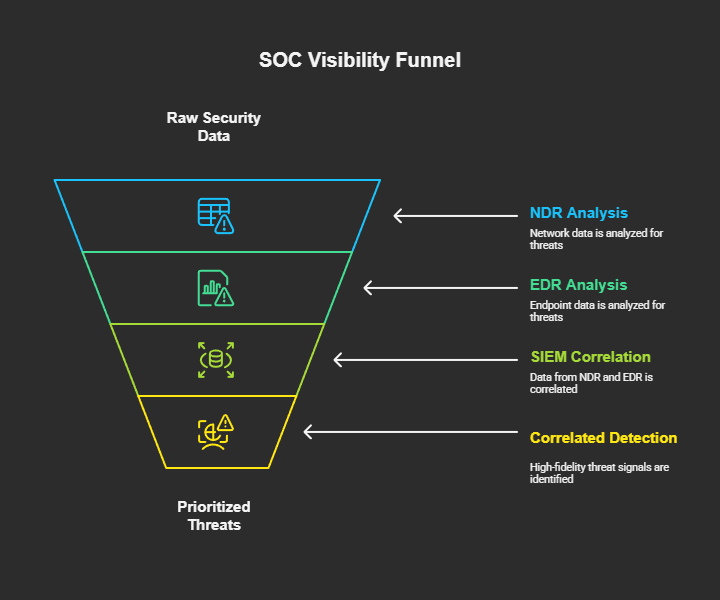
図:SOC 可視化の3本柱 — SIEM + EDR + NDRによる相関分析による検知。SOCトライアド・アプローチは、SIEM、EDR、およびネットワーク検知・対応機能を 統合し、ログ、エンドポイント、ネットワークデータ全体にわたる相関分析による可視性を提供します。各ツールが独立したアラートストリームを生成するのではなく、相関分析による検知機能によって、攻撃対象領域 全体にわたる関連するシグナルを結びつけ、攻撃者の行動 に基づいて、数千件のアラートを優先順位付けされた少数の脅威シナリオへと変換します。
Vectra AI アラート疲労をどうVectra AI Vectra AI「侵害を前提とする」という哲学では、アラート疲労を「アラートの量」の問題ではなく、「シグナルの質」の問題として捉えています。Attack Signal Intelligence 、ネットワーク、クラウド、ID、SaaS、IoT/OT環境全体にわたる振る舞い Attack Signal Intelligence 、高精度なシグナルによって真の脅威を特定します。これにより、単にアラートをフィルタリングしたり抑制したりするのではなく、アラートのノイズを最大99%削減します(Globe Telecom)。Vectra AI 検知の現状」レポートでは、統合SOCプラットフォームを通じて 提供されるシグナルの明瞭さが、アナリストにすべての検知結果に対して自信を持って対応する力を与える仕組みについて詳述しています。